
Vilnius Travel Guide: Is Lithuania’s Capital Worth Visiting?
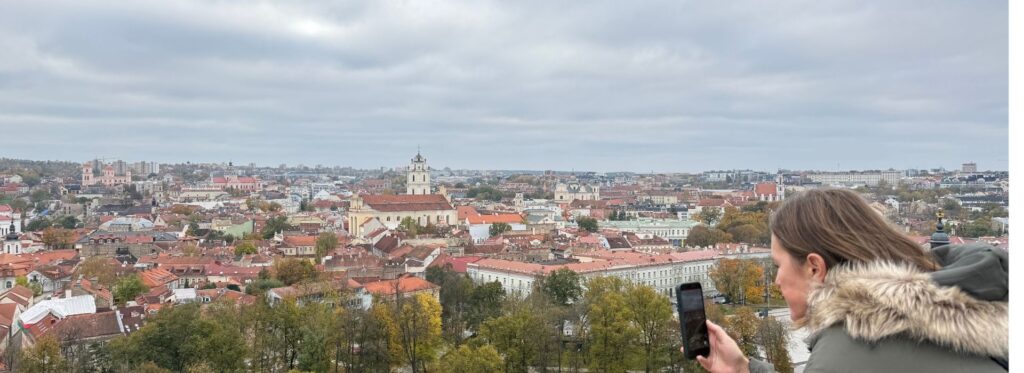
My sister Laurie and I arrived in Vilnius on a cold, rainy evening in October. It was only around 7:30, but it was already dark, and by the time we got to our apartment we were ready to eat something and call it a night. We had a couple of full days to explore and a long list of places we wanted to see.
Vilnius had been on our list for a while, although I wasn’t entirely sure what to expect. We stayed in Old Town, walked everywhere and managed to see a surprising amount in a short visit. It’s a manageable city to explore on foot, with quiet streets, some very good small shops and art in places you could easily walk past. There’s also a complicated history that comes up again and again as you move around the city.
Our family has Lithuanian roots, which gave us another reason to make the trip. Even without that connection, though, I think Vilnius deserves more attention than it gets. Here’s what we did, where we stayed and what I’d recommend if you’re planning your own visit.
Disclosure: Some of the links in this guide are affiliate links. If you book a hotel or tour through them, we may earn a small commission at no additional cost to you. We only recommend places and experiences we genuinely believe will help you plan a better trip. Thank you for supporting thegetAwayZ. Read our full Affiliate Disclosure.
Vilnius at a Glance
- Where it is: The capital of Lithuania, the southernmost of the three Baltic states, bordering Latvia, Belarus and Poland
- How long to stay: Three full days if you want to slow down. We did it in two very full days.
- Getting around: On foot. We walked 8 to 10 miles a day and never needed transit inside the city.
- Language: Lithuanian. Public signs are in English too, but plenty of staff speak only a little.
- Currency: Euro
- Best for: Travelers who’ve done the big European capitals and want somewhere that still feels like its own place
Our Tip: Take a walking tour early in your visit. We saw quite a few places from outside first and returned later to go inside. It was an easy way to get oriented without spending the entire day checking directions.
Getting to Vilnius and From the Airport
Getting to Vilnius was a little more complicated than I expected. Flights that worked with our dates were limited, so we booked two one-way tickets: Wizz Air from Eindhoven to Vilnius and airBaltic back to Düsseldorf. Wizz Air got us there, but it’s definitely an airline where you need to check what’s included before you pay. I much preferred the return flight on airBaltic. If you’re flying with just a carry-on, check the airline’s baggage rules carefully.
Check our carry-on size guide for budget airlines before you pack.
We used Bolt, which works much like Uber, to get between the airport and our apartment in Old Town. It was about €9 when we arrived and €7 on the return. There is a cheaper train, but it drops you at the station rather than at your accommodation. After arriving in the dark and cold, being dropped at the door was worth the extra few euros.
One detail worth knowing: neither Bolt driver spoke English. We had entered the address in the app, so that wasn’t a problem. We also found that English was less widely spoken in shops and restaurants than we expected, although we always managed to communicate.
Where We Stayed in Vilnius
We booked a two-bedroom apartment on Booking.com, and it turned out to be a great choice. It was on the top floor of an old building, with plenty of space, beautiful furnishings and a view toward Gediminas Tower. Laurie was particularly impressed with how clean it was. She said you could have eaten off the floors, which tells you everything you need to know.
The location made getting around very easy. We were right near the Presidential Palace and Pilies Street, one of the main streets in Old Town. Our little street narrowed into an alley that was barely wide enough for a few people walking side by side. There was also a Rimi grocery store nearby, which was useful when we got in late and didn’t feel like going out for dinner.


If you’d rather have a hotel, the Old Town has some beautiful ones in old palaces and merchant houses. We pulled together the best options by neighborhood and budget in our Where to Stay in Vilnius guide.
Start With a Walking Tour
I usually like to book a tour on the first morning in a new city. For Vilnius, I chose a two-and-a-half-hour Old Town walking tour through GetYourGuide that included snacks. I thought we might stop to eat little things along the way, but the food came at the end. The tour itself was excellent. Our guide, Milda, knew the city incredibly well and was happy to answer questions about everything from architecture to Lithuanian history.
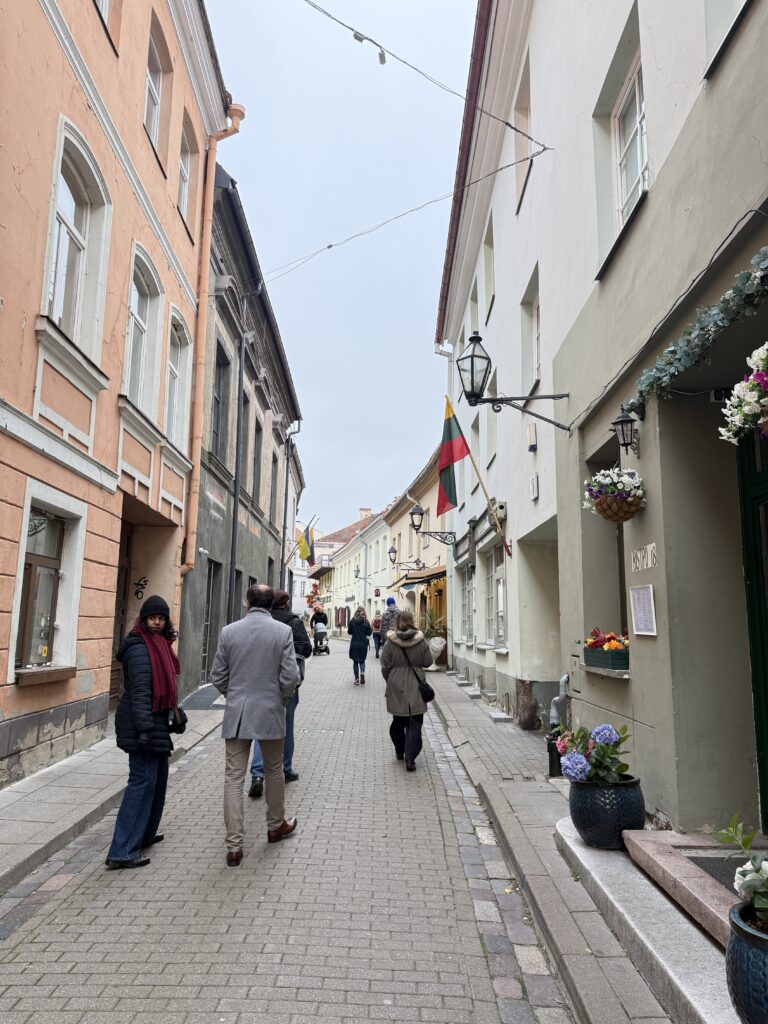
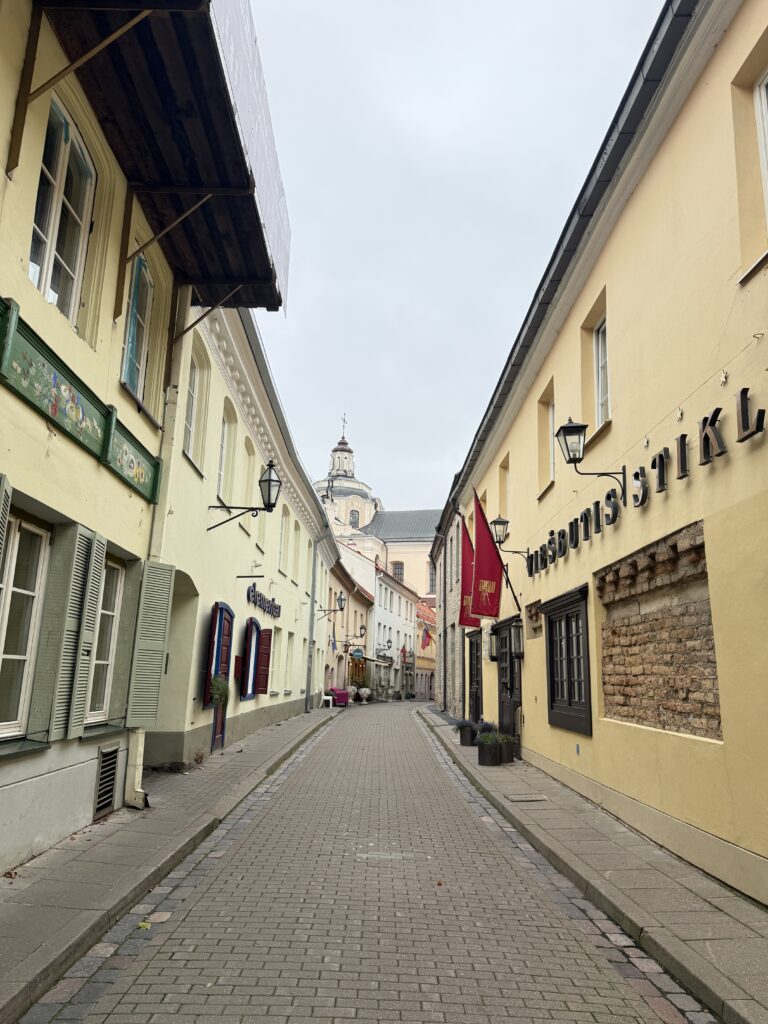
It was a small group of about six or seven people, and we were the only two traveling together. Everyone else was on their own, with some visiting other Baltic countries before or after Vilnius. It made for some interesting conversations, especially because people had very different reasons for being there.
I’d recommend doing this tour near the beginning of your trip. Milda took us to most of the main Old Town sights, but she also pointed out things we never would have noticed. We went back to several places afterward to spend more time there.
Our review of the Vilnius Old Town walking tour.
Cathedral Square and the Gediminas Statue
Cathedral Square is the big open space at the foot of the castle hill, and it’s where the tour met. Vilnius Cathedral looks more like a Greek temple than a church from the outside, with a separate white bell tower standing on its own. In the middle of the square is the statue of Grand Duke Gediminas, the ruler credited with founding Vilnius.
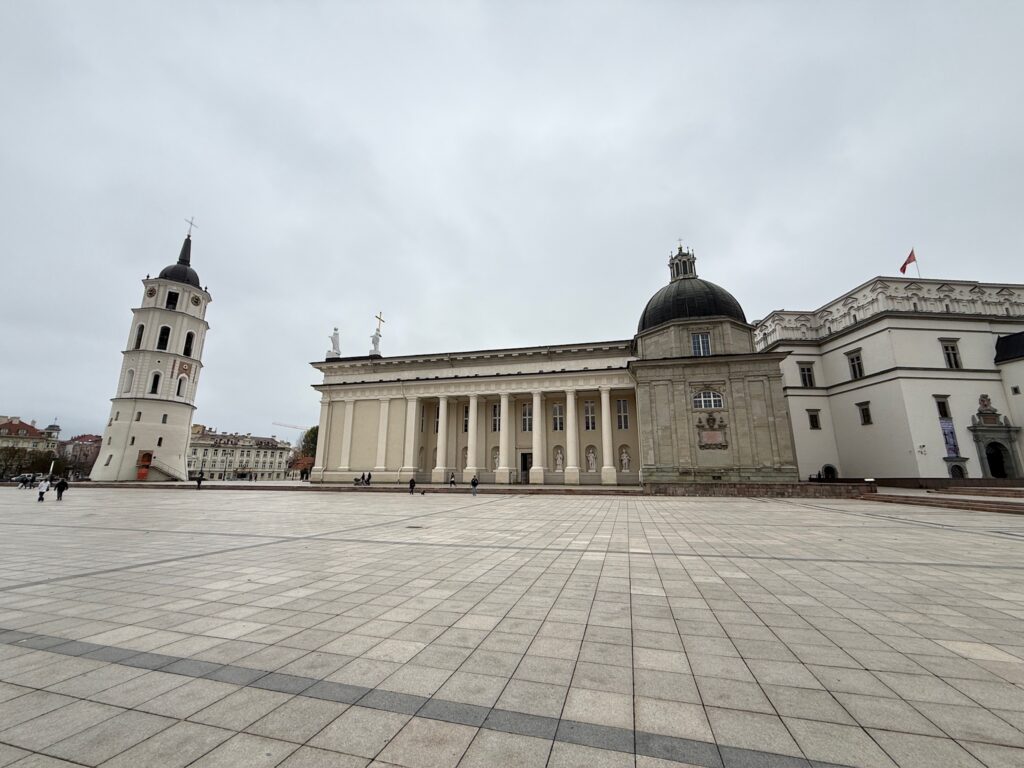
Milda told us about Grand Duke Gediminas and pointed out the way he leans forward in his statue. She explained it as a reference to his diplomacy and his willingness to reach out to other people. I wouldn’t have picked up on that just by looking at it.

We didn’t go into the cathedral with the tour group, but we returned later. If you’re planning to visit some of the churches in Old Town, check their opening hours. Several weren’t open when we first passed by.
Something I really liked about Vilnius was that it never felt particularly crowded. People were out, the streets and squares were active and there were plenty of cafés and shops. But we never had that feeling of fighting our way through a city full of tourists.
The Presidential Palace and Vilnius University
One of my favorite details was practically outside our apartment. Milda stopped us beneath an archway and asked us to look up. There was a tiny sculpture of a businessman holding a briefcase and looking thoroughly annoyed. Laurie and I had walked right underneath it several times without seeing it. I thought he looked like Steve Carell having a bad day on The Office. That’s one reason the tour was so worthwhile: there was interesting artwork everywhere, but you had to know where to look.

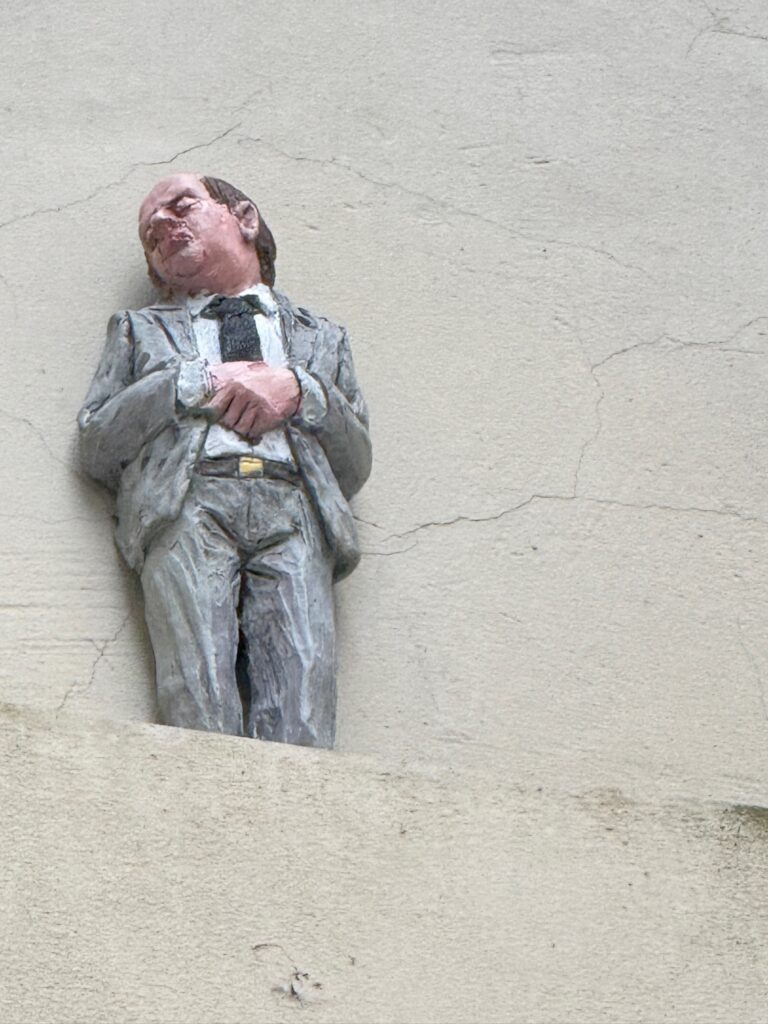
At the Presidential Palace, Milda explained how Lithuania’s president and prime minister have different responsibilities. She also showed us a photograph of the president and spent a moment admiring his jawline, which was not exactly the history lesson I expected.
We also walked behind the palace, where there’s a courtyard with places to sit and a large chessboard. It seemed unusually accessible for a government building, although our guide made it clear that security was still very much present.
Vilnius University is spread across several buildings in Old Town. Milda had studied there herself, which made this stop especially interesting. We didn’t have time to go through the university courtyards, but they’d be worth adding if you have an extra day.
The Old Jewish Quarter and the Walls That Remember
The old Jewish Quarter was one of the most interesting parts of our walk. Today you’ll find small cafés, restaurants, shops and the Glass Quarter, an area historically associated with local craftspeople. We passed outdoor seating even though it was quite cold. The neighborhood is lovely to walk through, but its history is much more difficult.
Milda showed us murals from the Walls That Remember project, which portrays Jewish residents and daily life before World War II. At one point she showed us the image behind one of the murals. It was a small detail, but it made the people depicted feel much more real.

Vilnius had a large Jewish population before the war. During the Nazi occupation, Jewish residents were forced into ghettos and most were murdered. I’m glad the walking tour included this history rather than treating the neighborhood as just another pretty part of Old Town.
The Portal: Waving at Strangers on Another Continent
After the Jewish Quarter, Milda brought us to something completely different: the Portal. It’s a large circular screen that links Vilnius by live video to public spaces in other cities. People on both sides can see each other.
When we were there, everyone in our group started waving at people on the other side of the screen. At one point Philadelphia appeared, but it was nighttime there and nobody was around. We stood there waving at an empty square anyway. It sounds a little silly, but it was genuinely fun to watch.

I could easily have spent another half hour there, just to see which city appeared next and whether anyone waved back.
Užupis, the Republic With a Constitution for Cats
Laurie especially liked Užupis, the artists’ neighborhood just across the river from Old Town. In 1997, the neighborhood declared itself an independent republic. It isn’t a separate country, of course, but it has its own constitution and a very strong sense of identity. If you’ve visited Christiania in Copenhagen, you’ll understand the general idea, although Užupis has its own character.
There are rules posted near the entrance, including reminders to slow down, smile, keep an open mind and not fall into the river after having too much to drink. That gives you a reasonable idea of what to expect.
The constitution is displayed on a wall in different languages and is full of unexpected rights. Everyone has the right to be idle. Dogs have the right to be dogs. Cats have their own rather specific rights and responsibilities too. Naturally, the dog one was my favorite.
Art is everywhere, from sculptures along the river to a figure of Jesus carrying a backpack. Laurie loved a clothesline installation where the items hanging from it were made of wire. There’s also a shop called Border Patrol where you can pick up a souvenir and stamp your passport with an Užupis stamp.
We crossed into Užupis on the tour and returned later to look around some more. There are restaurants and a bar near the river, so you could easily spend a few hours here rather than just walking through. From there we walked along the river and came across Tibet Square, another unusual little corner of the city. Vilnius has a lot of places like this that are easy to miss when you’re focused on the bigger sights.


St. Anne’s and the Bernardine Church
There are a remarkable number of churches in Vilnius Old Town. Our guide said there were around 30 in a fairly small area, and after a while it did seem as though we were passing another church every few minutes. Lithuania’s religious history is complicated, especially through the years of Soviet occupation.
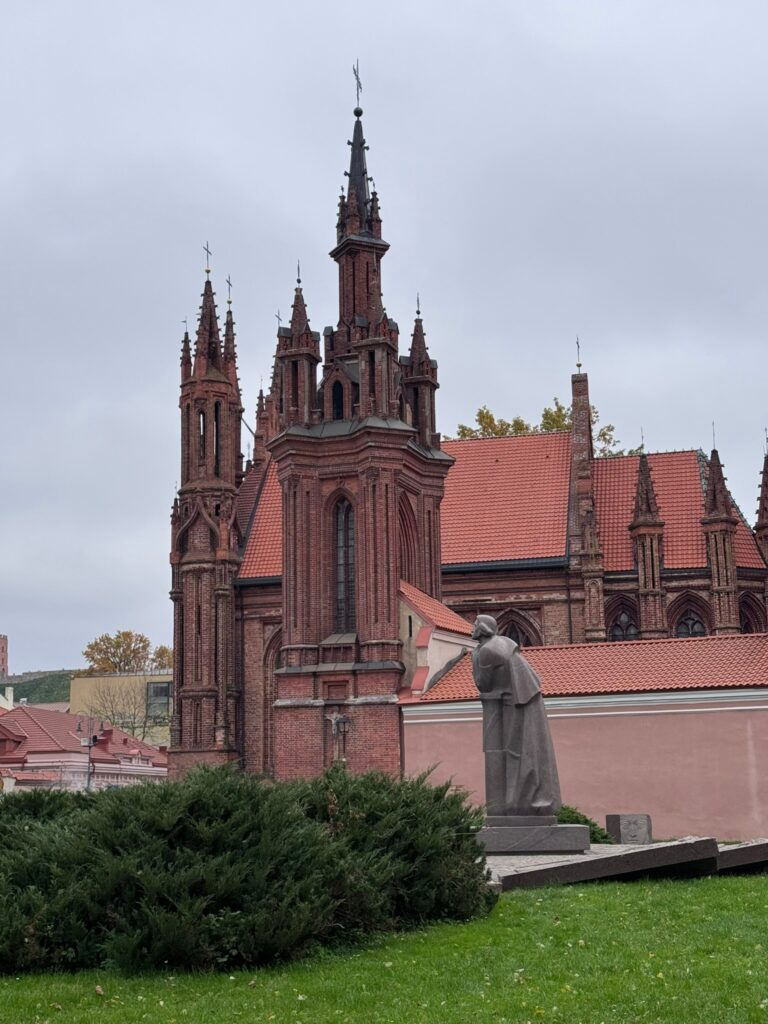
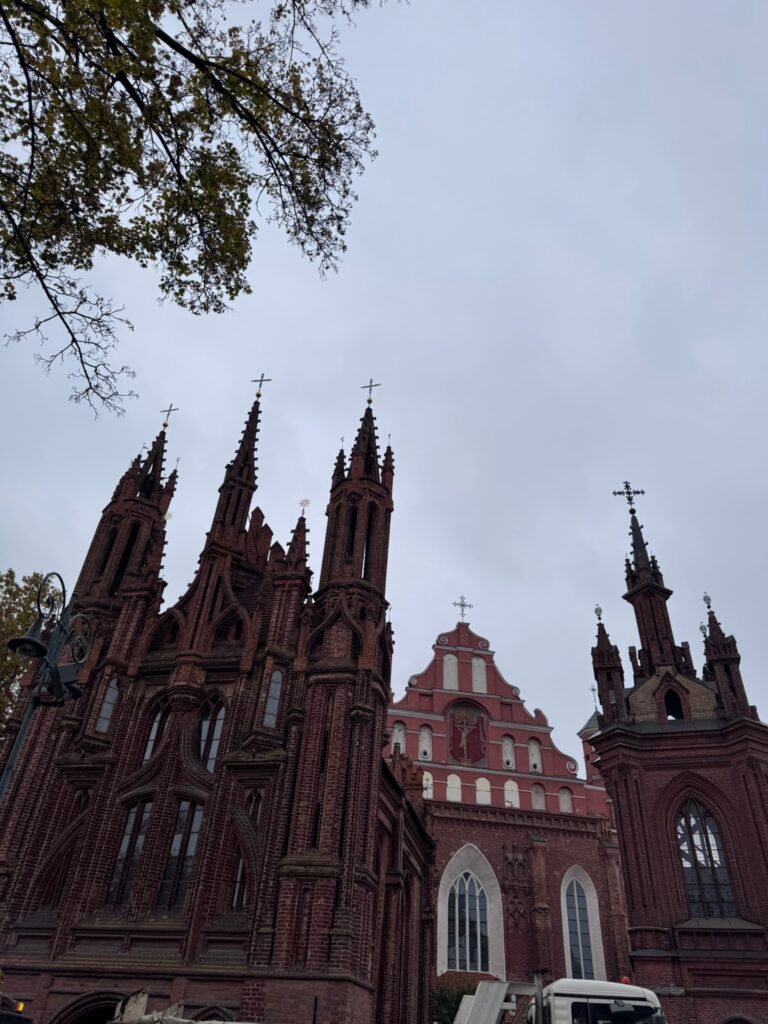
The two you don’t want to miss stand right next to each other. St. Anne’s is Gothic red brick, all points and spires, built from 33 different kinds of brick. Legend says Napoleon liked it so much he wanted to carry it back to Paris in the palm of his hand. Right behind it is the much larger Church of St. Francis and St. Bernard, the Bernardine Church, in a completely different style. One of the men on our tour asked the obvious question: where did all that money come from, to build two enormous churches touching each other?
We were able to visit the Bernardine Church, but St. Anne’s was closed when we passed. It’s worth checking access times in advance if going inside these churches is important to you.
Literatų Street, Amber and the Small Shops
Literatų Street is easy to miss if you don’t know it’s there. It’s a narrow street lined with small artworks dedicated to writers and other literary figures connected to Lithuania. You can spend quite a while looking at the individual pieces. I liked that the street itself has become a kind of outdoor gallery.
Amber is everywhere in the shops, along with linen and other locally made products. Our guide told us about finding amber on the beach when she was younger. There’s also an amber museum in Old Town, although it wasn’t open when we tried to visit.
I particularly liked the shopping in the smaller streets. Instead of rows of chain stores, we found little shops selling wooden ornaments, handmade decorations and things designed by the owners. In one shop, the woman behind the counter explained how her grandmother had inspired some of her work. Those are the places I’d make time for.

Gediminas Tower: Take the Funicular
Old Town is mostly flat, with one exception: the hill where Gediminas Tower and the ruins of the Upper Castle sit. You can walk up or take a short funicular from the courtyard of the Old Arsenal. The ride takes about two minutes and costs a couple of euros.
We tried walking up to Gediminas Tower and changed our minds partway. The path is steep and paved in uneven, rounded stones, which aren’t especially friendly if you have hip or knee issues or you’re worried about slipping. There’s a funicular, and that would be my recommendation if you don’t want to tackle the hill on foot.
The views from the top are worth going for. You can look across Old Town and toward the newer part of Vilnius, where modern buildings and Soviet-era architecture sit side by side. It’s one of the best places to get a sense of the city’s layout, and we went back to see the view again later.

The Museum of Occupations and Freedom Fights
We visited the Museum of Occupations and Freedom Fights, often called the KGB Museum, on our second day. I hadn’t necessarily thought of it as the main attraction of the trip, but it ended up being one of the most important places we went. The building itself was used during the Soviet occupation, and the exhibitions explain how people lived under occupation and how they resisted.
Even before you walk in, you see names on the outside of the building. Inside, the exhibits make a difficult period of Lithuanian history much easier to understand. Our guide had already talked about how little people could trust one another during Soviet rule, so the museum gave more context to what we’d heard.
The upstairs galleries include documents, objects and personal stories. Downstairs you can visit the former prison cells. That part is particularly upsetting, and it’s not somewhere I would recommend taking young children without thinking carefully about what they’ll see.
Lithuania regained independence in 1990, with international recognition and the end of Soviet control following in 1991. Visiting the museum helped me understand how recent so much of this history is. It also gave us a different perspective on the city we’d been walking around for the previous two days.
The museum is closed Mondays and Tuesdays, so plan around that. It isn’t a good fit for young kids, especially the basement.

The Hill of Three Crosses and Kalnai Park
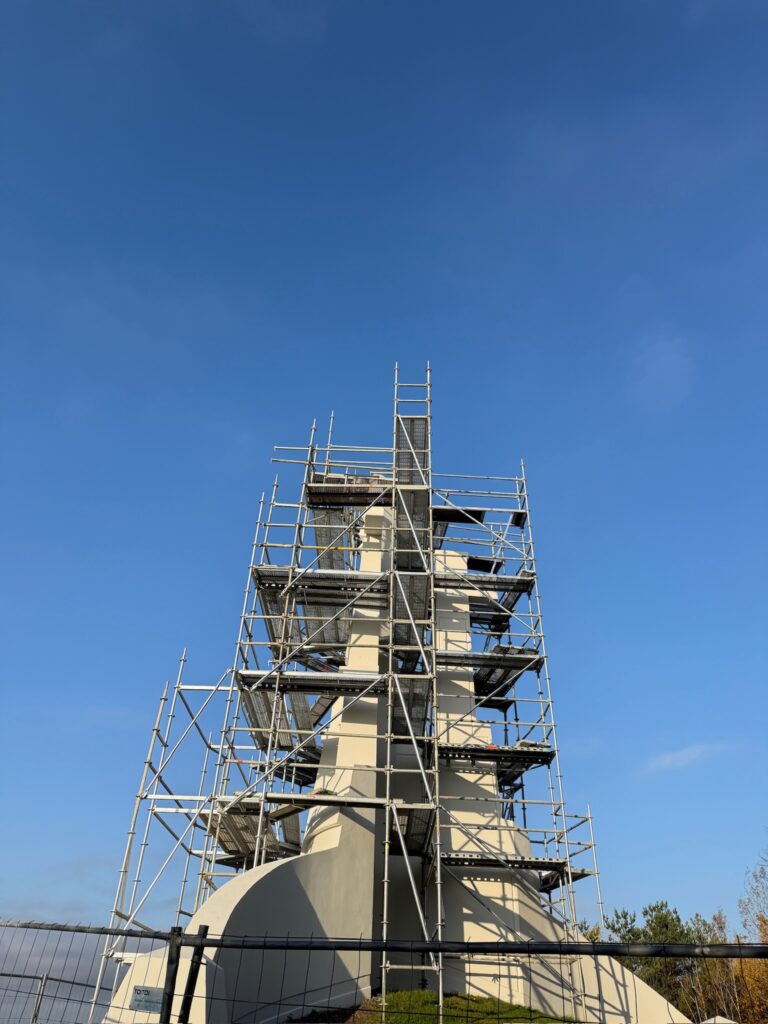
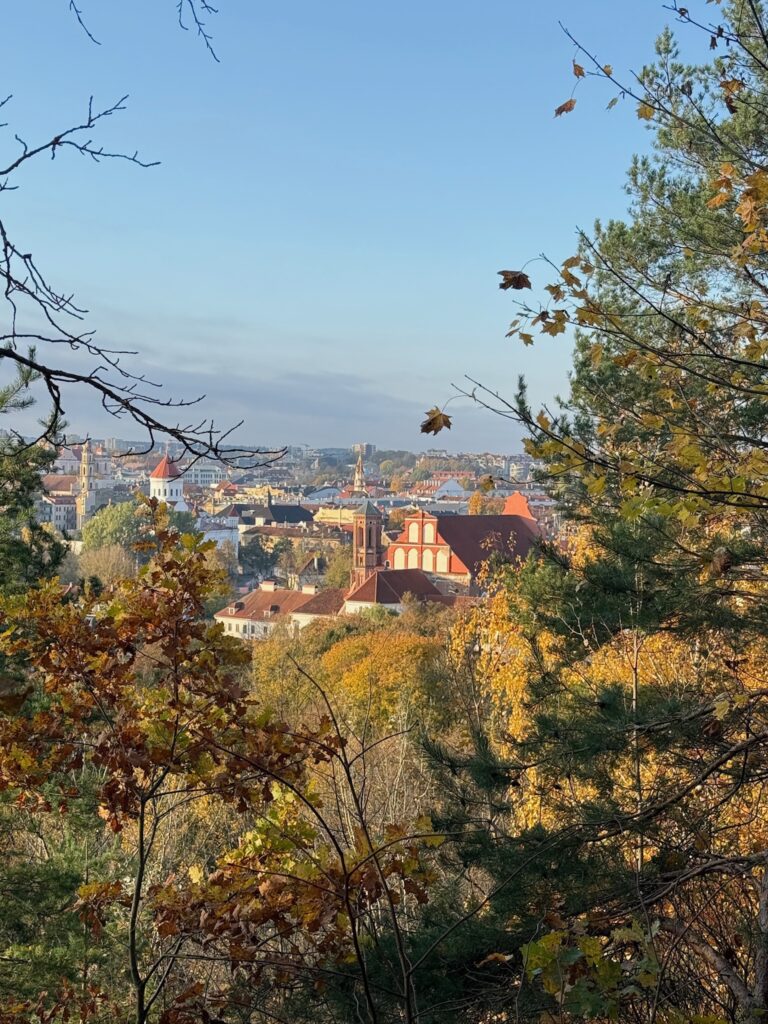
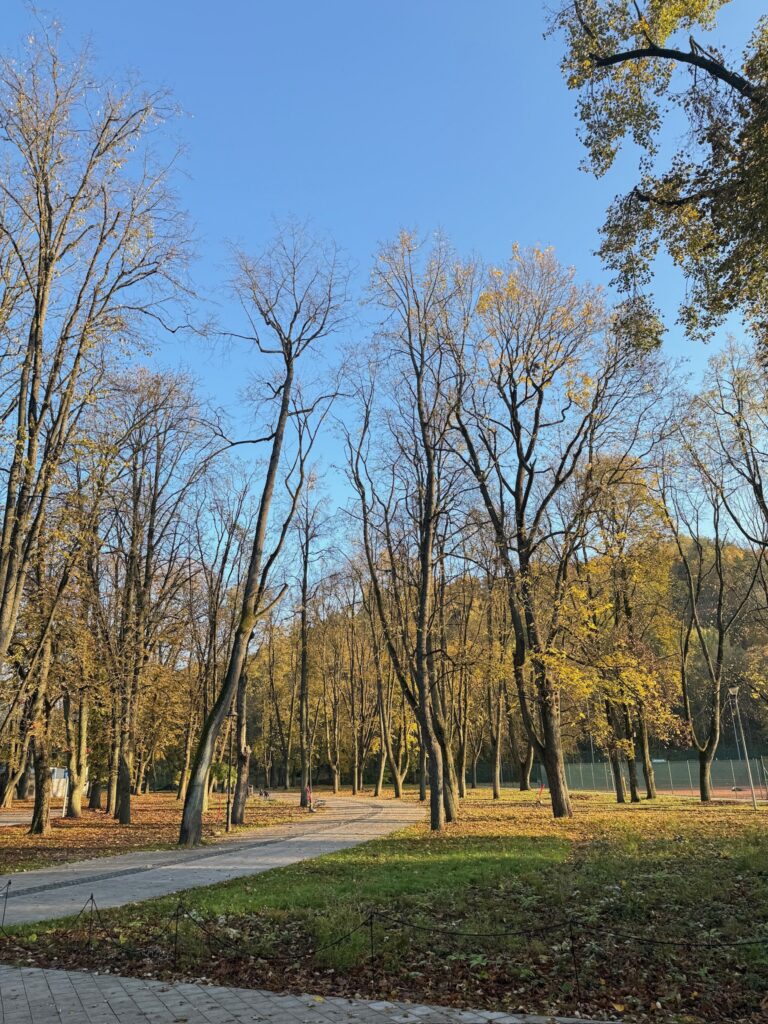
Kalnai Park gives you a very different side of Vilnius. There are wooded paths, hills and plenty of stairs, with the Hill of Three Crosses one of the main reasons people climb up. The monument was covered for construction when we visited, so we didn’t get the view of the crosses that we expected.
We still enjoyed the walk. The leaves were changing in October, people were out with their dogs and there was even someone preparing a Halloween display in the woods. Be prepared for a climb, though. This is not a flat city park.
Where We Ate in Vilnius
For our first lunch, we went to Etno Dvaras on Pilies Street to try some Lithuanian food. I ordered šaltibarščiai, the bright pink cold beet soup made with kefir. Cold soup on a cold day might not sound ideal, but I wanted to try it. Laurie went for a mushroom soup served in a dark rye bread bowl. We also tried hot wine, which turned out to be exactly what it sounds like: wine served hot.


We also ate at a Georgian restaurant one evening. Neither of us knew a great deal about Georgian food before the trip, so it was fun to try something different. I had pork with potatoes and peppers, and Laurie ordered chicken with a tomato and cucumber salad. Vilnius has plenty of international restaurants alongside traditional Lithuanian places.
Another good stop was Paupys Market, a modern food hall just beyond Užupis. There were several different places to eat, lots of seating and plenty of choice if you don’t want a long restaurant lunch. It’s worth keeping in mind if you’re exploring that side of town.
For the full list, including the places we didn’t get to, see our Where to Eat in Vilnius guide.
Things We Wish We’d Known Before Visiting Vilnius
We got by speaking English, but not everyone we met spoke it comfortably. A few people were fluent, while in other shops and restaurants we mostly pointed or kept the conversation simple. Public signs often had English translations, which made getting around easier. I’d download a translation app before you go.
We also learned that grocery stores stop selling alcohol at certain hours. On most days, you can’t buy it after 8 p.m., and Sunday hours are more restricted. You can still order a drink in a bar or restaurant, but don’t assume you can buy a bottle at the supermarket late in the evening.
Dinner seemed to start earlier than we’re used to. If you have a particular restaurant in mind, I’d check the hours and make a reservation rather than expecting a late walk-in.
People weren’t particularly smiley with strangers on the street, but we never felt unwelcome. Our guide talked about how Lithuania’s history has affected everyday interactions. I wouldn’t read too much into someone seeming reserved at first.
Wear comfortable shoes with decent grip. We walked a lot, and some of the paving is uneven or slippery, especially if it has been raining.
We felt comfortable walking around Old Town, including after dark. Of course, use the same common sense you would in any city.
We went in October and found it cold, windy and sometimes wet. If you’re planning an autumn or winter visit, pack layers and a proper jacket. The weather can make a big difference when you’re spending most of the day outside.
If you’re deciding when to go, our guide to the best time to visit Vilnius breaks it down season by season.
How Many Days Do You Need in Vilnius?
We had two full days in Vilnius, plus the evening we arrived, and they were busy days. You can see the main Old Town sights in that time, but three days would be more comfortable. You’d have time to spend longer in the museums, go into more churches and sit down for a proper lunch instead of checking the clock.
We didn’t make it out of the city on this trip. Trakai, with its castle on an island, is a popular day trip, and our guide mentioned several other places nearby that would be worth exploring. I’d like to come back and see more of Lithuania, possibly as part of a longer trip through the Baltic states.
I had expected Vilnius to remind me more of Prague, but it didn’t. The scale of Old Town is different, and we found it very easy to settle into exploring on foot. I’d recommend it to anyone who enjoys European city breaks but wants somewhere outside the usual Paris, Rome and Amsterdam circuit.
Listen to Our Vilnius Episodes
We talked about our visit on thegetAwayZ podcast in two episodes. Laurie joined Erin and me to go through what we did, from the Old Town walking tour and the art in Užupis to trying local food and visiting the KGB Museum. Listen if you want more details and a few of the stories we couldn’t fit into this guide.
Listen to Vilnius Part 1 · Listen to Vilnius Part 2 (Nov 2)
Short on time? Here’s how we’d spend one day in Vilnius.
Frequently Asked Questions About Visiting Vilnius
Yes. The Old Town is small, walkable and full of art and history, it’s rarely crowded and it feels very different from the big Western European capitals. It’s a great pick if you’ve done Paris and Rome and want something new.
Two full days covers the main sights if you keep moving. Three full days lets you slow down, go inside the churches and add a day trip to Trakai.
We felt completely safe walking everywhere, including after dark. Most of the people on our walking tour were traveling solo.
Public signs are in Lithuanian and English, and many younger people speak some English. In shops and restaurants it’s often just enough to get by, so a translation app helps.
A Bolt ride cost us about €7 to €9. The train is under a euro and takes a few minutes, but it stops at the main train station, so you’ll still need to get to your hotel from there.
Užupis is an artists’ neighborhood next to Old Town that declared itself an independent republic on April 1, 1997. It has its own playful constitution, a passport stamp and art all along the river.
Planning More European City Trips
If you’re planning other European city breaks, we also have guides to these places:
- Prague Guide and Where to Stay in Prague
- Copenhagen Travel Guide, including Christiania
- One Day in Helsinki
- Best Places to Visit in Europe in Fall
