
The Best Time to Visit Vilnius (We Went in October: Chill and Chilly)

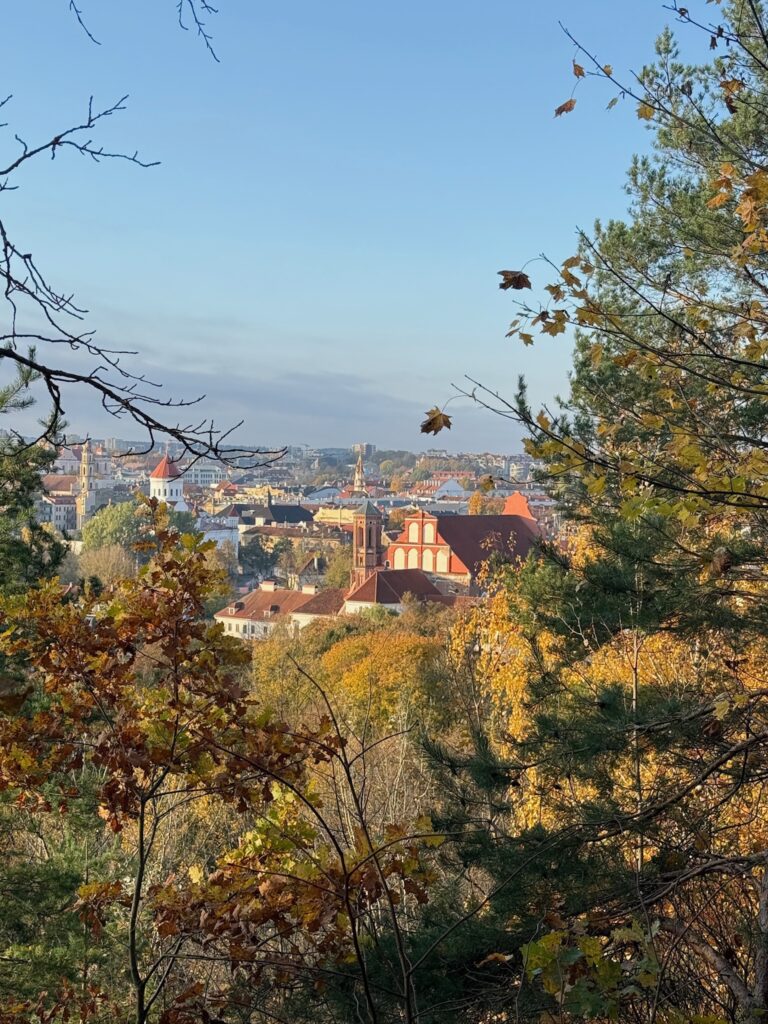
When I said Vilnius felt lively without ever feeling crowded, Laurie had a better way to put it: “Chill and chilly.” That sums up October in Vilnius pretty well, at least when we were there. We landed after dark in the rain with a wind that went straight through our jackets, and over the next two days we walked about ten miles a day in weather that never really warmed up. The sky was mostly clear, and we even got a bit of sun but it was still chilly. It was also beautiful. The leaves were turning in Kalnai Park, café tables were still set up outside, and we almost never had to share a view with more than a handful of people.
So, what’s the best time to visit Vilnius? It depends on how much cold you’ll put up with and what you want from the trip. Here’s what we found in fall, and what each season offers based on our research.
Disclosure: Some of the links in this guide are affiliate links. If you book a hotel or tour through them, we may earn a small commission at no additional cost to you. We only recommend places and experiences we genuinely believe will help you plan a better trip. Thank you for supporting thegetAwayZ. Read our full Affiliate Disclosure.
Vilnius Seasons at a Glance
- Best overall: Late May to early June, or September to early October
- Best for Christmas markets: Late November through December
- Warmest: July, with average highs around 73°F (23°C)
- Coldest: January, with average highs around 29°F (-2°C) and lows around 21°F (-6°C)
- Daylight: About 17 hours in late June, about 7 in late December
Our Tip: Whatever month you pick, pack for wind. The number on the forecast didn’t tell us much. I always look at the “feels like” number but even that doesn’t always work. It was the wind that made us cold.
What October in Vilnius Was Like for Us
We went in October, and I’d go again at the same time. It was cold, especially at night and it rained the night we arrived. But the city wasn’t busy at all. Even Cathedral Square never had more than a few people standing around at once, and on our walking tour there were only six or seven of us.
We covered a lot of ground during our two days in Vilnius, but our walking tour helped us understand what we’d been passing along the way. We wrote about the experience in The Vilnius Walking Tour.
Fall color was a big part of why the walk up to the Hill of Three Crosses was my favorite thing we did. The leaves were falling like snow in the breeze. It was magical. The forest was gold and red, there were people out hiking with their dogs, and someone was setting up a big Halloween display among the trees.
There were a couple of downsides. It gets dark early, so the arrival around 7:30 p.m. felt like midnight. The Amber Museum was closed the week we were there, and St. Anne’s Church was locked every time we walked past. Although, I am not sure the cause of the closure was the season. A lot of the churches we wanted to see inside didn’t open until around 1:00 in the afternoon, so plan indoor sights after lunch.
Fall in Vilnius (September to November)
September is the sweet spot of the fall months. Average highs are around 61°F (16°C), the summer crowds are gone and the city’s calendar is full: the Vilnius Fiesta street festival the first weekend of September, the Vilnius Book Fair and the Vilnius Marathon.
October cools down to highs around 50°F (10°C) and lows near 38°F (3°C). That’s what we had, and it was manageable with layers. Vilnius Jazz runs in mid-October. By November it’s gray, damp and dark early, with snow possible from early in the month. Gastronomy Week in November is a good excuse to go if food is your main reason for traveling.
Best for: Quiet streets, fall color and lower hotel prices. If you love fall trips, our list of the best places to visit in Europe in fall has more ideas.
Winter in Vilnius (December to February)
Winter in Vilnius is serious. Average January highs sit just below freezing, around 29°F (-2°C), and a few days a year it drops to around -4°F (-20°C). December is the cloudiest and snowiest month, with about seven hours of daylight around the solstice.
It’s also when Vilnius puts on its biggest show. The Christmas tree on Cathedral Square has become famous, and the city was named a European Christmas Capital for 2025. In 2026 the tree lighting and the Christmas market on Cathedral Square both start November 28, with the market running through December 27. There’s an ice rink on Town Hall Square, a Christmas train through the lit-up Old Town and a design market in mid-December where local makers sell handmade gifts. In late January, the Vilnius Light Festival fills the streets with light installations. The city prides itself on having an interesting holiday theme each year. This year it is Christmas Walkersus. It makes slow down. It encourages slow walks to enjoy the lights and hot drink. It is a way to try and combat the hectic pace that sometimes takes over the season.
Speaking of slowing down, Laurie mentioned wanting to try one of the spas next time, and winter is when that makes the most sense. There are several all over the city that we would definitely try next time, especially in winter.
Best for: Christmas markets, snow and a cozy trip built around long lunches and warm cellars. See our guide to Christmas markets in Europe if you’re planning a December trip.
Spring in Vilnius (March to May)
Early spring is still cold, around freezing in March, but it starts with one of the city’s biggest traditions: Kaziukas Fair, a huge craft fair in early March with more than a thousand vendors selling woven palms, wooden crafts, linen and food. It’s the best time of year to buy the kind of handmade things we loved finding on the side streets.
April 1 is Užupis Day, when the artists’ “republic” celebrates its independence. By May, average temperatures are in the mid-50s Fahrenheit (around 13°C), and the days are getting long. Street Music Day and the Night of Museums both happen in mid-May, and at the end of the month there’s the Vilnius Pink Soup Fest, an entire festival for the bright pink cold beet soup I tried at lunch on our first day.
Best for: Festivals, shopping for crafts at Kaziukas and longer days without summer crowds.
Summer in Vilnius (June to August)
Summer is the warmest and busiest season, with July highs around 73°F (23°C) and close to 17 hours of daylight in late June. Café terraces fill up, the river in Užupis is only about knee-deep (our guide said people wade in when it’s warm), and Culture Night in June keeps the city open late with art and performances. The Kristupas Summer Festival runs concerts through the summer.
It’s the easiest weather for walking all day, but it’s also when hotels cost the most and the most visitors are in town. Some older buildings, including at least one budget guesthouse we looked at, don’t have air conditioning, so check if you’re booking for July.
Best for: Long days, outdoor dining and day trips to Trakai’s island castle.
Our Pick for the Best Time to Visit Vilnius
If you want comfortable walking weather and a quieter city, go in September or early October, which is what we’d do again. If you love Christmas markets and don’t mind cold, go in December. If you want festivals and long days without peak summer prices, aim for late May.
Whenever you go, book somewhere central so you’re not spending cold evenings walking back from the edges of the city. Our Where to Stay in Vilnius guide has hotels and neighborhoods for every budget, and our full Vilnius travel guide covers everything we did.
If you’re planning a shorter visit, we’ve also put together a one-day Vilnius itinerary based on everything we saw during our two days exploring the city on foot.
FAQ About the Best Time to Visit Vilnius
September is the best all-around month, with mild weather, thinner crowds and a full festival calendar. Late May is a close second.
Yes, if you’re prepared for cold. The Christmas market and tree on Cathedral Square are the highlight, but days are short and temperatures can drop well below freezing.
In 2026 the Christmas market on Cathedral Square runs from November 28 to December 27, opening the same day the city’s Christmas tree is lit.
Average highs are around 50°F (10°C) with lows near 38°F (3°C). It felt colder to us because of the wind, so bring a warm jacket and a hat.
Late fall and late winter, outside the Christmas market season, usually have the lowest hotel prices.

