
Dolomites Travel Guide: Planning Your First Trip
Plus Our Favorite Places in South Tyrol

Before we moved to Italy, I had never heard of the Dolomites. Even after living there for years, Lisa and I couldn’t agree on exactly what counted as the Dolomites, the Italian Alps or South Tyrol. We had that exact argument on the podcast and neither of us won.
Our first trip was in 2017 for Lisa’s birthday. We stayed high in the mountains near Olang, and one of my clearest memories is lying on a massage table in a little hut and hearing bells outside. I looked out and realized I was completely surrounded by cows. We’ve been going back to this part of northern Italy ever since, usually staying high in the mountains with Dylan and Lisa’s dog.
The Dolomites take a little more planning than many places in Italy. The valleys are farther apart than they look, choosing the right base matters and some of the most popular places now have seasonal access restrictions. But you don’t have to be a serious hiker to have a great trip here. We’ve spent plenty of time riding gondolas, swimming in heated mountain pools, eating very well and taking walks that don’t require hiking boots.
In this Dolomites travel guide, I’ll explain how the region fits together, where to base yourself and what we’ve learned from our own trips. For places we haven’t visited ourselves, I’ll make that clear and separate our experience from our research.
Disclosure: Some of the links in this guide are affiliate links. If you book a hotel or tour through them, we may earn a small commission at no additional cost to you. We only recommend places and experiences we genuinely believe will help you plan a better trip. Thank you for supporting thegetAwayZ. Read our full Affiliate Disclosure.
Our Tip: Pick one valley and stay for at least three nights. Distances in the Dolomites can be deceptive because mountain roads make getting from one area to another much slower than it looks on a map. You’ll enjoy the trip more if you aren’t changing hotels every night.
What Are the Dolomites? (And Are They the Same as the Italian Alps?)
The Dolomites are part of the Alps, but the two names aren’t interchangeable. They’re a mountain range in northeastern Italy known for their pale limestone peaks, which can turn shades of pink and orange around sunrise and sunset. That effect is known as enrosadira.
The mountains take their name from dolomite, the rock that gives them their distinctive appearance. Dolomite itself was named after the French geologist Déodat de Dolomieu, who studied the rock in the late 1700s.
The Dolomites became a UNESCO World Heritage Site in 2009. The protected area covers nearly 142,000 hectares across nine separate mountain systems, with 18 peaks rising above 3,000 meters. Marmolada is the highest peak in the Dolomites at 3,343 meters.
Part of what makes planning a trip here confusing is that the Dolomites don’t fit neatly into one region or province. The UNESCO World Heritage property alone stretches across five Italian provinces, and you’ll see South Tyrol, Trentino and Veneto come up constantly when you’re researching where to stay.
One distinction that confused us at first was South Tyrol versus the Dolomites. They overlap, but they’re not the same thing. Some of the best-known Dolomite destinations, including Val Gardena and Alta Badia, are in South Tyrol, but South Tyrol also has plenty of mountains that aren’t part of the Dolomites. That’s how we’ve managed to take several mountain trips to South Tyrol without technically being in the Dolomites every time.
Bolzano and Trento can also cause some confusion. Both are useful gateway cities for exploring the surrounding mountains, but neither city is actually in the Dolomites.
Italian, German and Ladin: Who Lives Here and What They Speak
One of the first things that confused us in this part of Italy was the language. In much of South Tyrol, German is the first language, while Italian is more common in places like Bolzano. Then there’s Ladin, a Romance language that has been spoken in the Dolomite valleys for centuries.
We first learned about Ladin from the guy running the archery course below our hotel. I couldn’t get over the fact that we’d driven to Italy and were suddenly somewhere with signs in Italian, German and Ladin, and often English too.
You’ll also notice that many towns have more than one name, which can make maps confusing when you’re planning. Olang is Valdaora, Bruneck is Brunico and Brixen is Bressanone. In the Ladin-speaking valleys, you may see a third version as well.
The mix carries over into the food and architecture. Tyrolean-style hotels and mountain huts sit alongside Italian restaurants, and menus can include speck, dumplings, polenta and apple strudel alongside dishes you’d expect elsewhere in northern Italy.
Where We’ve Stayed in the Dolomites and South Tyrol
Most of our trips to this part of Italy have been built around a mountain hotel rather than a town. We usually choose somewhere with hiking or walking right from the property, a pool and spa and breakfast and dinner included, then stay put for a few days.
We’ve stayed in the Dolomites themselves as well as other parts of South Tyrol. They aren’t the same thing, as we explained above, so I’ve noted which is which. If choosing a base is the part you’re struggling with, our Where to Stay in the Dolomites guide goes into much more detail. What Is Half Board in the Dolomites?. We always travel with our dog so dog friendly hotels are important to us. You can read more about traveling with a dog in Dolomites with a Dog.
Berghotel Zirm, Olang: Our First Dolomites Trip

This is where our first trip to the area started. Berghotel Zirm sits above Olang, or Valdaora in Italian, in Val Pusteria on the northern edge of the Dolomites. We came for Lisa’s birthday with Dylan and our dog Cash, and it ended up being one of those trips we still talk about years later.
The drive up to the hotel is one of the things I remember most. The road climbs the mountain and felt much closer to the edge than I was comfortable with. Once we arrived, though, we barely needed the car again.
Our stay included breakfast and dinner, which is common at mountain hotels in this part of Italy. Breakfast was a huge buffet, dinner was included and we were on our own for lunch. We liked that setup so much that half-board hotels became something we started looking for on later mountain trips. If you haven’t stayed this way before, we explain how it works in our Half-Board Hotels in the Dolomites guide.
One afternoon, I booked a massage in a small hut near the outdoor pool. Halfway through, I started hearing bells outside. When I looked out, the hut was surrounded by mountain cows. It is still probably the best setting I’ve ever had for a massage.
The next morning, we walked along a stream through the hills and came across more cows. Cash immediately found something disgusting to roll in, Dylan lost a flip-flop in the water and when I reached down to grab it, I discovered stinging nettles for the first time. Lisa remembers my reaction to that part better than I do.


There’s also easy access to the Olang gondola, which takes you up to Kronplatz. At the top, we found a restaurant and a playground where Dylan could play while cows wandered around nearby. Below the hotel was an outdoor activity area with archery, mini golf and other activities, so we had plenty to do without spending our days driving from sight to sight.


That first trip is a big reason we started staying in one place for a few nights in the Dolomites instead of trying to see everything in one trip.
Alpenpalace, Ahrntal: Not Technically the Dolomites, but Hard to Skip
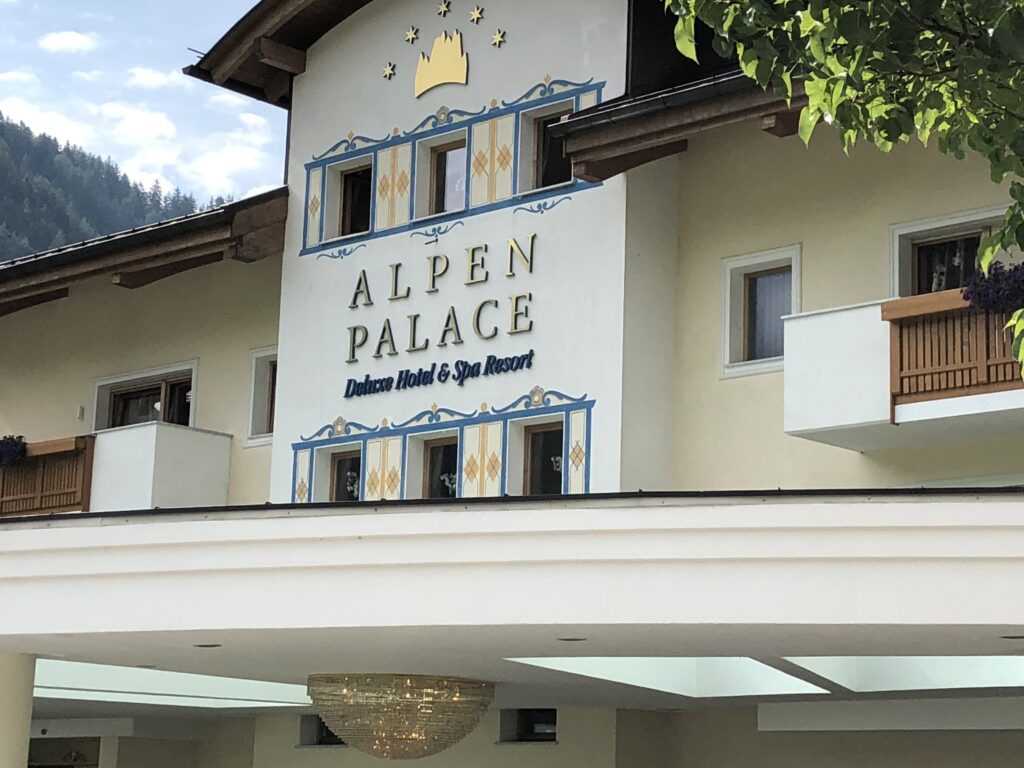
Alpenpalace is in the Ahrntal Valley in South Tyrol, so it isn’t technically in the Dolomites. We’ve stayed here twice, though, and it’s a good example of why it’s so easy to confuse the different mountain regions in northern Italy. You’re still surrounded by huge peaks, alpine villages and the kind of scenery most of us picture when we think of the Dolomites.
This is a much larger and fancier resort than Berghotel Zirm. Our rooms were huge, with a separate sitting area that worked as a sleeping space for Dylan and a balcony looking out toward the mountains. The hotel has indoor and outdoor pools, hot tubs and a spa, and we stayed half board with breakfast and dinner included.
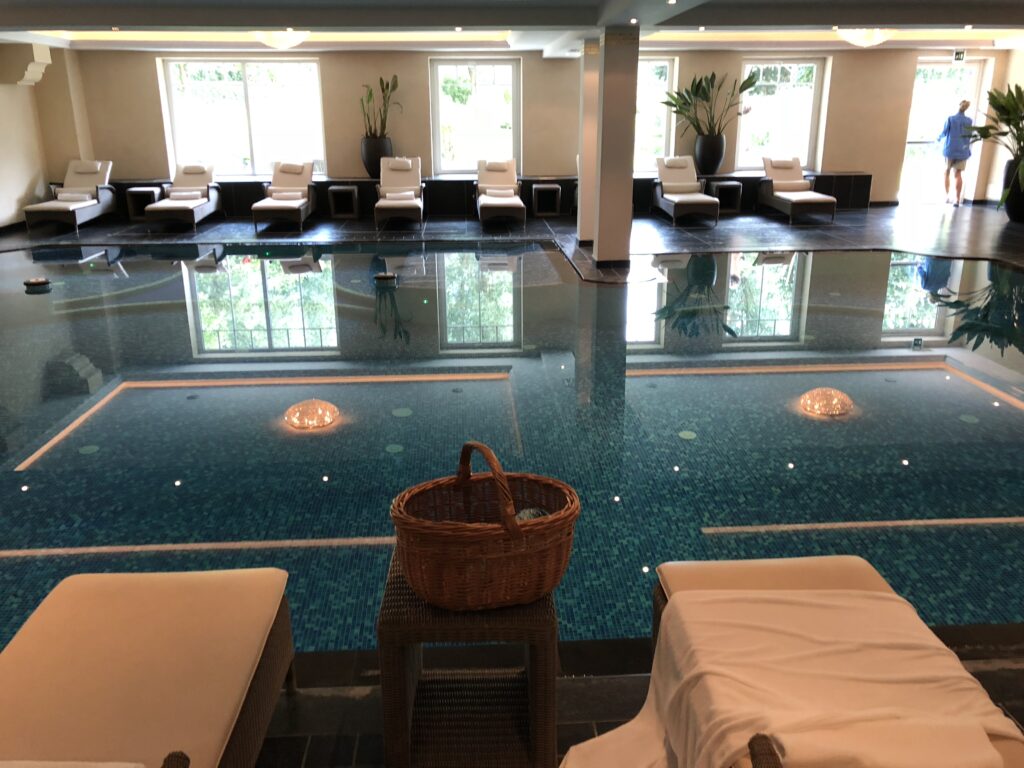
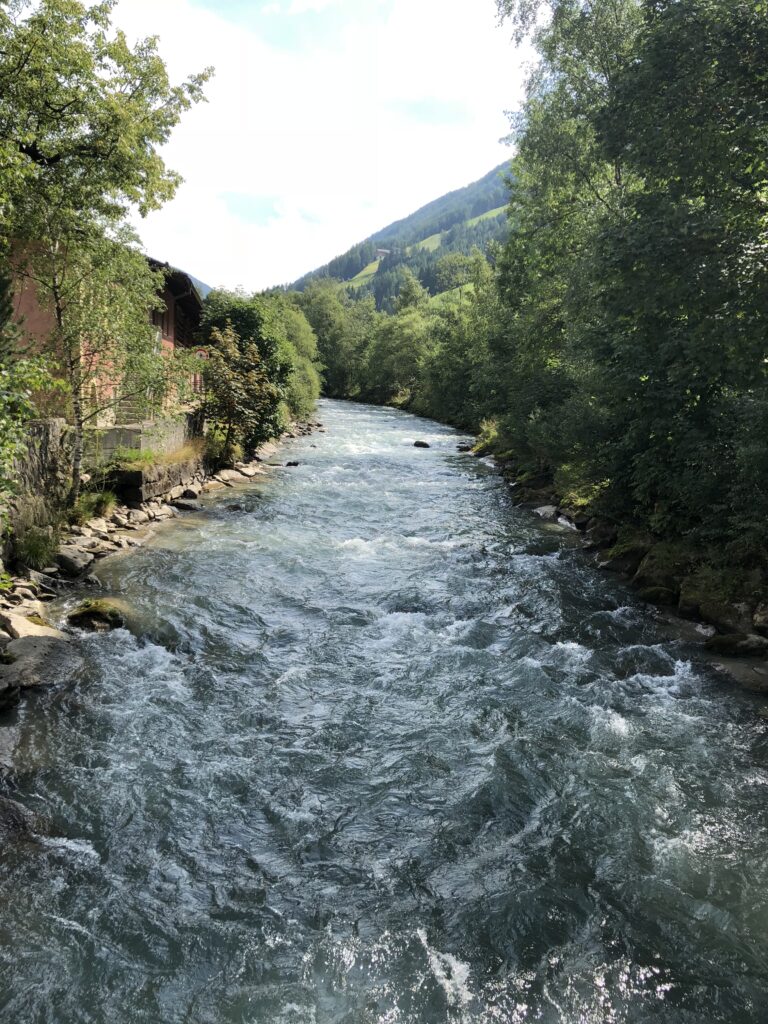
One of our stays was cold enough to have snow on the ground, and sitting outside in the heated pool surrounded by snow is still one of my favorite memories from the hotel. There’s also plenty to do without going far. We loved walking along the river near the hotel, and the Klausberg mountain area is just a short drive away.
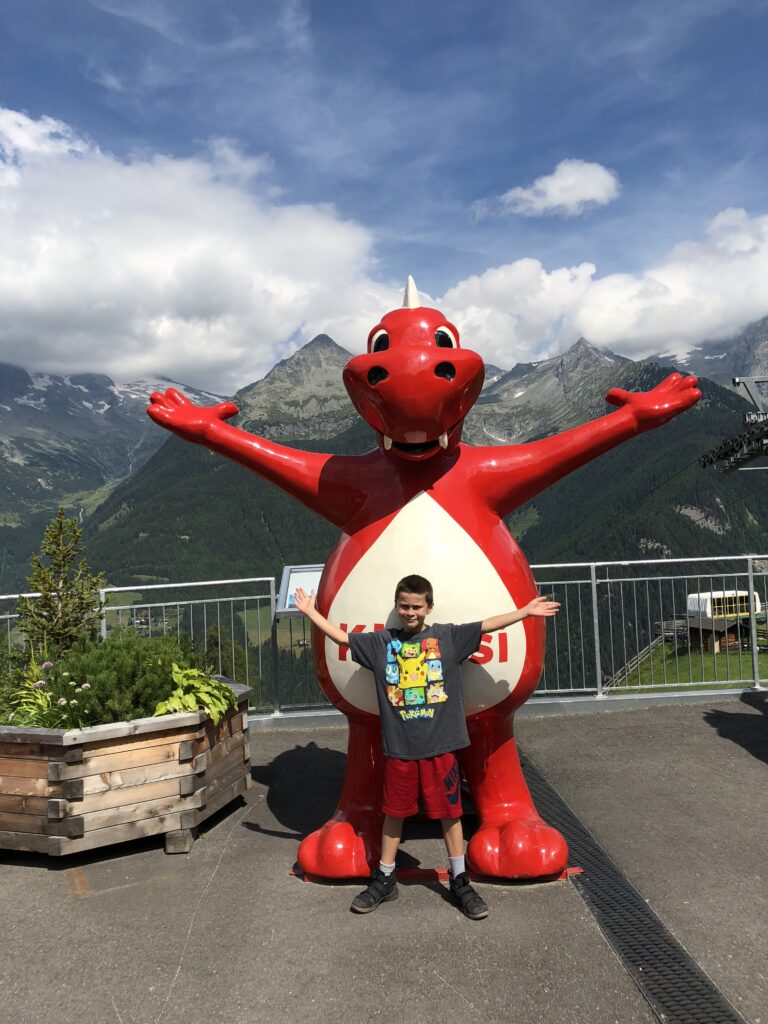
Klausberg is a ski area in winter, but in summer it turns into a family mountain park. You take the gondola up the mountain, where there are walking and hiking trails, an alpine coaster and Dinoland with life-size dinosaurs. It was especially good when Dylan was younger because we could spend the day in the mountains without the entire day being about hiking.
We’ve always found Ahrntal much quieter than the famous Dolomites destinations. I wouldn’t choose Alpenpalace as a base for a Dolomites sightseeing trip, but if you want a mountain resort where you can slow down for a few days, it’s a place we’ve been happy to return to.
Josef Mountain Resort, Avelengo: Hiking and a Mountain Spa

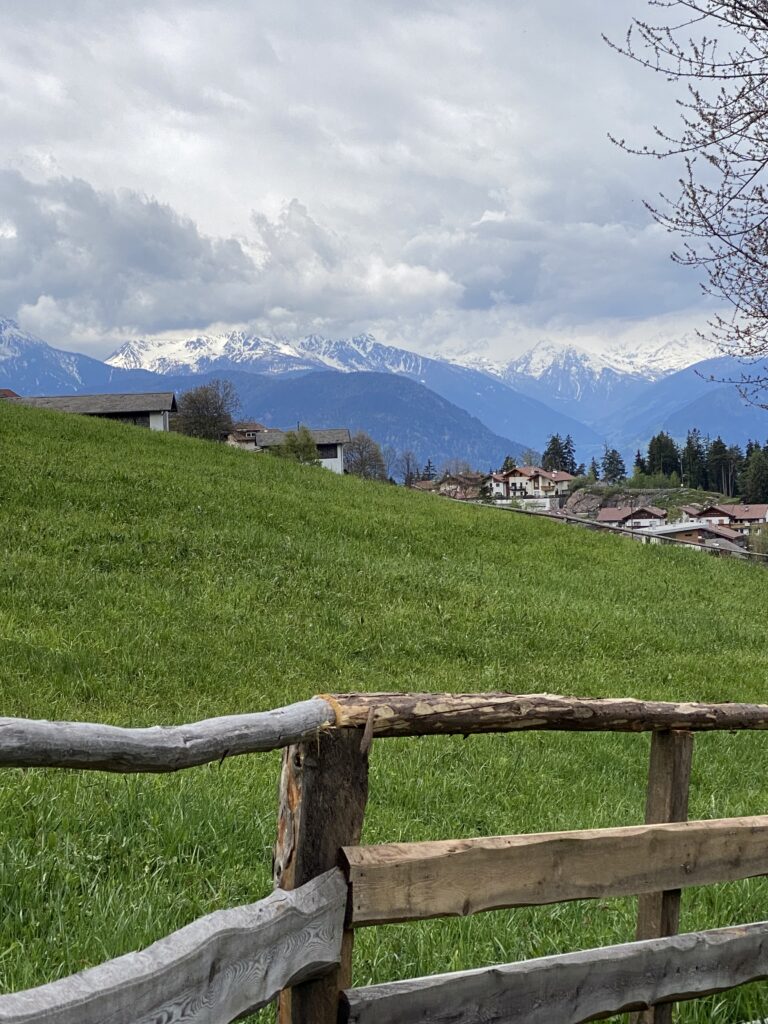
Our stay at Josef Mountain Resort was another very different South Tyrol experience. The hotel is in Avelengo, in the mountains above Merano, surrounded by forest and hiking trails.
This was exactly the kind of mountain hotel we had learned to look for by this point. We could spend part of the day outside, then come back and use the pool and spa rather than getting back in the car to find something else to do.
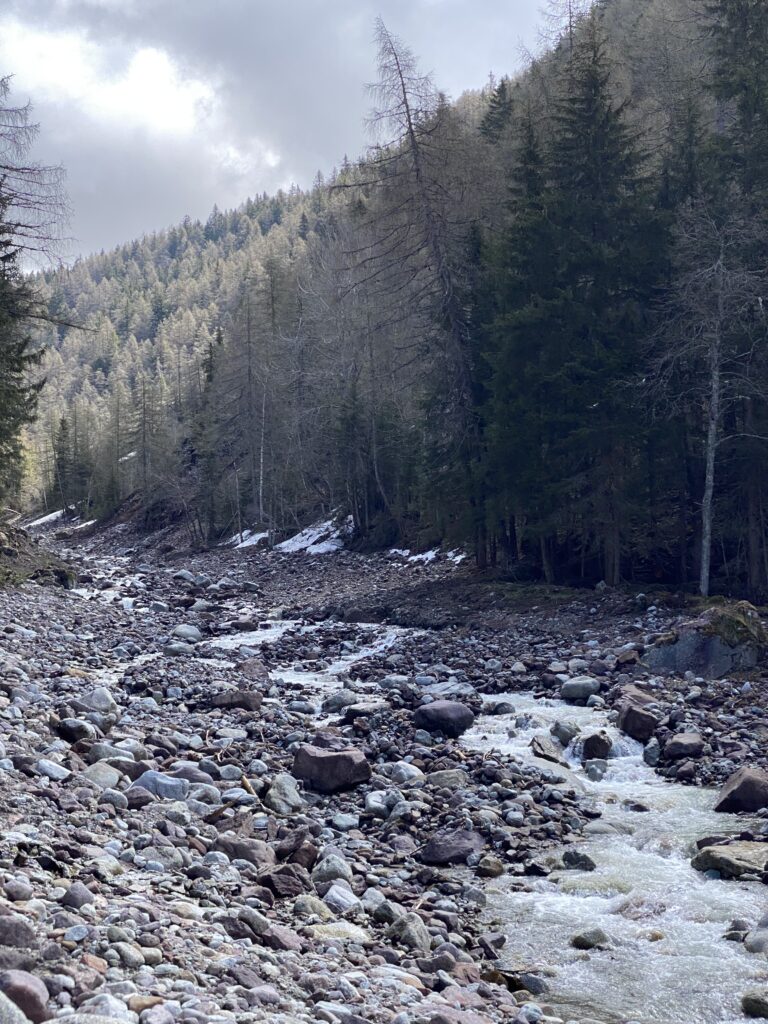
Some of our favorite time here was spent walking around the area. We followed trails through the forest, crossed streams and found waterfalls, with plenty of places where our dog could come along with us. The scenery changed quickly from dense woods to open meadows and rocky mountain valleys.
The pool was another reason we chose Josef. After being outside for much of the day, having a proper spa and pool at the hotel made a big difference. This is one of the things we came to appreciate about mountain hotels in South Tyrol. The hotel isn’t simply somewhere to sleep between sightseeing days. It can be part of the trip itself.

Josef Mountain Resort isn’t in the Dolomites themselves, so I wouldn’t choose it as a base for a trip focused on Cortina, Val Gardena or the major Dolomites sights. But if you’re extending your trip into South Tyrol or Merano, it’s a good example of how easy it is to build a few slower mountain days into the same trip.
The Best Towns and Valleys in the Dolomites
Choosing where to stay is probably the most important decision you’ll make when planning a Dolomites trip. The region is much more spread out than it looks on a map, and driving from one valley to another can take considerably longer than you’d expect.
There isn’t one town that works as the perfect base for everything. Where you stay should depend on what you most want to see and how much time you have. For a first trip, I’d choose one main area rather than trying to cover the entire Dolomites from a single hotel.
| Base | Best for | Do you need a car? |
|---|---|---|
| Val Pusteria | Kronplatz, Lago di Braies, family trips | Yes |
| Ortisei (Val Gardena) | Seceda, Alpe di Siusi, mountain lifts | Yes |
| Alta Badia | Scenic drives, food, quieter villages | Yes |
| Cortina d’Ampezzo | Tre Cime, eastern Dolomites, first-time sightseeing | Yes |
| Val di Fassa | Central location, mountain passes | Yes |
| San Martino di Castrozza | Pale di San Martino, quieter mountain base | Yes |
Val Pusteria: Olang, Kronplatz and the Northern Dolomites
Val Pusteria, or Pustertal in German, is the part of the Dolomites we know best. Olang was the base for our first trip, when we stayed at Berghotel Zirm, and it works particularly well if you want a mountain holiday without being surrounded by the crowds of some of the better-known Dolomites towns.
Kronplatz is the big draw here. In winter it’s one of South Tyrol’s major ski areas, but we visited in summer and used the gondolas to get up into the mountains. You can hike, stop for lunch, take in the views or simply ride back down again. It’s one of the reasons we think the Dolomites work even if hiking isn’t the main reason you’re coming.
This is also a useful area for reaching some of the best-known sights in the northern Dolomites. Lago di Braies is nearby, and the Tre Cime di Lavaredo area can be reached on a day trip, although I wouldn’t choose Olang solely as a base for Tre Cime.
The towns here feel quieter than places like Cortina or Ortisei. Brunico/Bruneck is the largest nearby town and is useful for restaurants, shopping and anything you need outside the resort areas.
Good for: Families, summer mountain trips, skiing, Kronplatz and travelers who want a quieter base.
Our experience: We’ve stayed in Olang and explored the area around Kronplatz ourselves. Lago di Braies and Tre Cime are included here for planning purposes, not because we visited them on that trip.
Val Gardena: Ortisei, Santa Cristina and Selva
Val Gardena is one of the best-known areas of the Dolomites, with three main villages: Ortisei, Santa Cristina and Selva di Val Gardena. We haven’t stayed in this valley ourselves yet, but it comes up constantly when planning a first trip because of its easy access to some of the mountains’ most recognizable scenery.
Ortisei is the largest of the three villages and gives you direct lift access toward Seceda and Alpe di Siusi. It’s a good option if you want restaurants, shops and a proper town around you rather than staying primarily at a mountain resort.
Santa Cristina is smaller and sits between Ortisei and Selva, while Selva di Val Gardena is higher in the valley and particularly convenient for getting into the mountains. Selva is also part of the Sellaronda, the famous route around the Sella massif that’s used for skiing in winter and cycling in summer.
For a first trip where seeing Seceda and Alpe di Siusi is high on your list, Val Gardena is one of the areas I would look at first. You can use the lifts to reach spectacular mountain scenery without needing to plan long hikes, which also makes it worth considering for the kind of Dolomites trip we tend to prefer.
Good for: Seceda, Alpe di Siusi, easy lift access and travelers who want a village base.
Our experience: We haven’t stayed in Val Gardena yet, so this section is based on our trip planning and research rather than firsthand experience.
Alta Badia: Corvara, Colfosco and La Villa
Alta Badia sits in the heart of the Dolomites and includes villages such as Corvara, Colfosco and La Villa. We haven’t stayed here ourselves, but it’s an area I’d consider if you want spectacular mountain scenery without basing yourself in one of the larger resort towns.
Corvara is the main resort village and one of the most convenient bases in Alta Badia. It’s surrounded by the Sella Group and has lifts running directly from the village, so you can get high into the mountains without relying on long hikes.
Nearby Colfosco is smaller and sits directly beneath some dramatic peaks, while La Villa has more of a village feel. This part of the Dolomites is also one of the areas where you’ll see and hear a lot of Ladin, which we talked about earlier in the guide.
Alta Badia is particularly well known for its mountain huts and food. You can spend the day riding lifts, taking shorter walks and stopping at rifugi rather than planning a major hike, which is one reason it appeals to us.
It’s also well positioned for exploring the mountain passes around the Sella massif, including Passo Gardena and Passo Campolongo. If you’re driving the Dolomites, this is the kind of area where the journey between places becomes part of the trip.
Good for: Mountain scenery, food, scenic drives, Ladin culture and easy access to lifts.
Our experience: We haven’t stayed in Alta Badia yet, so our recommendations here is based on friends advice.
Cortina d’Ampezzo: A Base for the Eastern Dolomites
Cortina d’Ampezzo is one of the most famous towns in the Dolomites and a useful base if the places you most want to see are in the eastern part of the mountains. We haven’t stayed in Cortina ourselves, but it makes sense for an itinerary focused on Tre Cime di Lavaredo, Lago di Misurina, Cinque Torri and the surrounding mountain passes.
Cortina is larger and more polished than many of the smaller mountain villages. There are plenty of hotels, restaurants and shops, so it can be a good choice if you want mountain scenery during the day but still want somewhere with more going on when you come back in the evening.
You also don’t have to be a serious hiker to use Cortina as a base. Cable cars and chairlifts provide access to higher elevations and viewpoints, and there are scenic drives and shorter walks throughout the area.
The trade-off is popularity. Cortina and the major sights around it can be extremely busy during peak summer and winter periods, so this is one area where I’d plan accommodation and any required access or parking reservations well in advance.
Good for: Tre Cime, Cinque Torri, eastern Dolomites, restaurants and travelers who prefer a larger town.
Our experience: We haven’t stayed in Cortina yet, so this section is based on our research. It is definitely the next place we want to go in the Dolomites.


Val di Fassa: Canazei and Campitello di Fassa
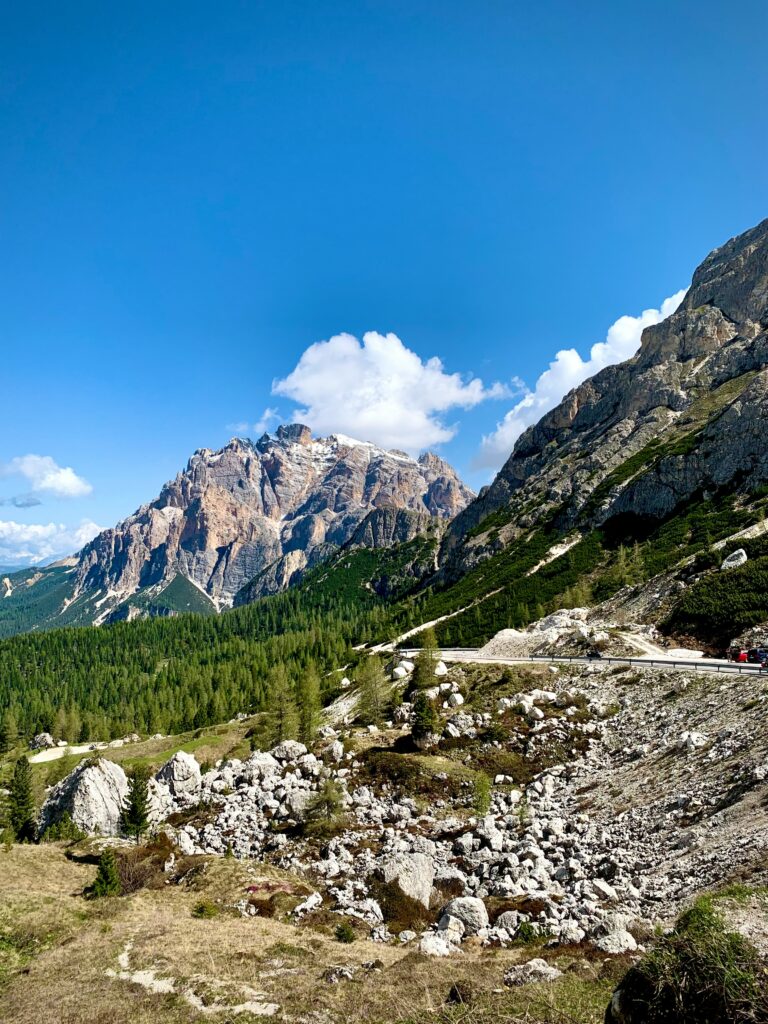
Val di Fassa is in Trentino and sits beneath some of the Dolomites’ most recognizable peaks. The main towns include Canazei, Campitello di Fassa, Pozza di Fassa and Moena, with Canazei and Campitello particularly well positioned for reaching the mountains around the Sella Group.
Canazei is one of the busier bases in the valley, with plenty of hotels, restaurants and lift access. Nearby Campitello di Fassa is smaller and quieter, with the Col Rodella cable car providing direct access into the mountains.
This is another Ladin valley, so you’ll see that cultural and linguistic mix here too. It’s also a useful base if scenic driving is part of your plans, with several of the Dolomites’ famous mountain passes within easy reach.
Val di Fassa makes particular sense if you want a fairly central base and plan to divide your time between lifts, shorter walks and driving through the mountains rather than focusing on one headline attraction.
Good for: Mountain passes, scenic drives, lift access, Ladin culture and a central Dolomites base.
Our experience: We haven’t stayed in Val di Fassa yet, so this section is based on our research and trip planning rather than firsthand experience.
San Martino di Castrozza: Pale di San Martino
San Martino di Castrozza sits beneath the Pale di San Martino, one of the most dramatic mountain groups in the Dolomites. It’s in Trentino and is smaller than places like Cortina or Ortisei, which makes it worth considering if you want a quieter mountain base.
The village has hotels, restaurants and lifts that take you directly into the surrounding mountains. The Colverde cable car and Rosetta cable car provide access toward the Pale di San Martino, so it’s possible to get high into the mountains without committing to a major hike.
This area also works well for scenic drives. Passo Rolle is nearby and is one of the places I’d put on the itinerary even if hiking isn’t your priority. The road takes you through high mountain scenery with views of the Pale di San Martino.
San Martino is farther from places like Seceda, Val Gardena and Tre Cime, so I wouldn’t choose it simply because accommodation happens to be cheaper. It makes more sense if this part of the Dolomites is actually what you want to explore.
Good for: Pale di San Martino, Passo Rolle, mountain lifts and a quieter base.
Our experience: We haven’t stayed in San Martino di Castrozza yet, so this section is based on our research and trip planning rather than firsthand experience.
The Brenta Dolomites: Madonna di Campiglio
The Brenta Dolomites sit west of the main Dolomites areas we’ve covered above. They’re still part of the Dolomites and part of the UNESCO World Heritage Site, but geographically they’re separated from places like Val Gardena, Cortina and Val di Fassa.
Madonna di Campiglio is the best-known resort town in this area. It’s surrounded by the Brenta Dolomites on one side and the Adamello-Presanella mountains on the other, with lifts running directly from the town.
This is an area I’d treat as its own trip rather than another base for exploring the Dolomites farther east. If you stay here, the Brenta Dolomites are the destination. There are mountain lifts, lakes, waterfalls and trails ranging from easy walks to serious hikes, so you don’t have to be an experienced hiker to enjoy the area.
It’s also considerably closer to Lake Garda than many of the eastern Dolomites destinations, which makes the two easier to combine on a longer northern Italy road trip.
Good for: Brenta Dolomites, mountain resorts, waterfalls and combining the mountains with Lake Garda.
Our experience: We haven’t stayed in the Brenta Dolomites yet, so this section is based on our research and trip planning rather than firsthand experience.


Listen: Why We Keep Going Back to the Dolomites
We’ve been traveling to the Dolomites and South Tyrol for years, usually with Dylan and one of Lisa’s dogs along for the trip. In this episode of The Getawayz Podcast, we talk about the mountain hotels we’ve stayed at, traveling here with kids and dogs, half-board hotels, hiking, gondolas and some of the reasons we keep coming back.
What to Do in the Dolomites
We’re probably not the people to ask for a list of the hardest hikes in the Dolomites. Most of our trips have involved a mix of easy walks, gondolas, mountain restaurants, swimming, spas and finding things Dylan could do while we enjoyed being in the mountains.
That’s actually one of the reasons we keep coming back. You can have an active trip here without spending every day on a six-hour hike.
Take the Gondolas Up
You don’t have to hike from the bottom of a mountain to experience the scenery. The lift network throughout the Dolomites makes it surprisingly easy to get high into the mountains, even with kids or if hiking isn’t your thing.
At Kronplatz, we took the gondola up and spent time at the top rather than treating the lift simply as transportation for a hike. There were places to eat, areas for kids and incredible views. We’ve done the same kind of thing on other mountain trips in South Tyrol.
This is one of the first things I’d look at when choosing where to stay: what can you reach by lift from your base?
Walk and Hike at Your Own Level
The Dolomites aren’t just for serious hikers. We’ve done plenty of walks where the goal was simply to follow a stream, stop when we wanted and find somewhere for lunch.
Of course, if hiking is the reason you’re coming, the options are enormous. Some of the best-known areas include Tre Cime di Lavaredo, Seceda, Alpe di Siusi and the trails around the Sella massif.
For us, the important thing has always been that you can choose how active you want the trip to be.
Don’t want to spend your whole trip hiking? Our Dolomites Without Hiking guide covers cable cars, scenic drives, easy walks and other ways we enjoy the mountains now.
Spend Time at a Rifugio
Mountain huts, or rifugi, are part of the experience here. Many can be reached by lift or relatively easy walks, so you don’t necessarily have to earn your lunch with a strenuous hike.
Stop for lunch, have a drink, sit outside and enjoy the mountains for a while. This is much closer to how we tend to spend a day in the Dolomites than racing from one attraction to another.
Drive the Mountain Passes
Having a car gives you access to some spectacular roads through the Dolomites. Passo Gardena, Passo Sella, Passo Pordoi and Passo Giau are among the best-known.
Just don’t underestimate the distances. A drive that looks short on a map can take much longer once you’re dealing with mountain roads, traffic, cyclists and the inevitable stops for photos.
If you’re still figuring out the logistics, our guide to How to Get to the Dolomites covers the best airports, train connections and whether you actually need a car once you’re here.
See the Famous Dolomites Sights
If this is your first trip, you’ll probably have at least a few of the famous places on your list: Tre Cime di Lavaredo, Lago di Braies, Seceda, Alpe di Siusi and Cinque Torri are among the names you’ll see repeatedly while planning.
If you’re deciding how to divide your time, our Dolomites itinerary has complete 3, 5 and 7 day itineraries. Also The Best Time to Visit the Dolomites.
